Huddle
A student-focused university networking app.
Project Overview
Huddle is a 15-week interactive design group project lead by Chloe Go, assisted by Phi Lam, Ethan Richards, Lauren Ritz, and Quentin Calloway. Our team designed a student networking app with functionality that would remove the need for multiple apps—a common trend many universities seem to follow. This project was designed under the Goal-Directed-Design framework, and fully prototyped Figma.
A student networking app with all-in-one functionality.
The current state of campus networking platforms has student's navigating through multiple different apps, still failing to provide one thing: a student-focused skill trading app that encourages networking and genuine interaction between students.
My team wanted to design a product as a reflection of our own college frustrations, and we created our app, Huddle, which will help users network and build relationships within their campus, by allowing them to trade skills with one another with intent, efficiency and safety. By providing a trusted, all-in-one ecosystem, students will feel the comfort, safety, and mutuality that is is found in successful networking.
Resemblance
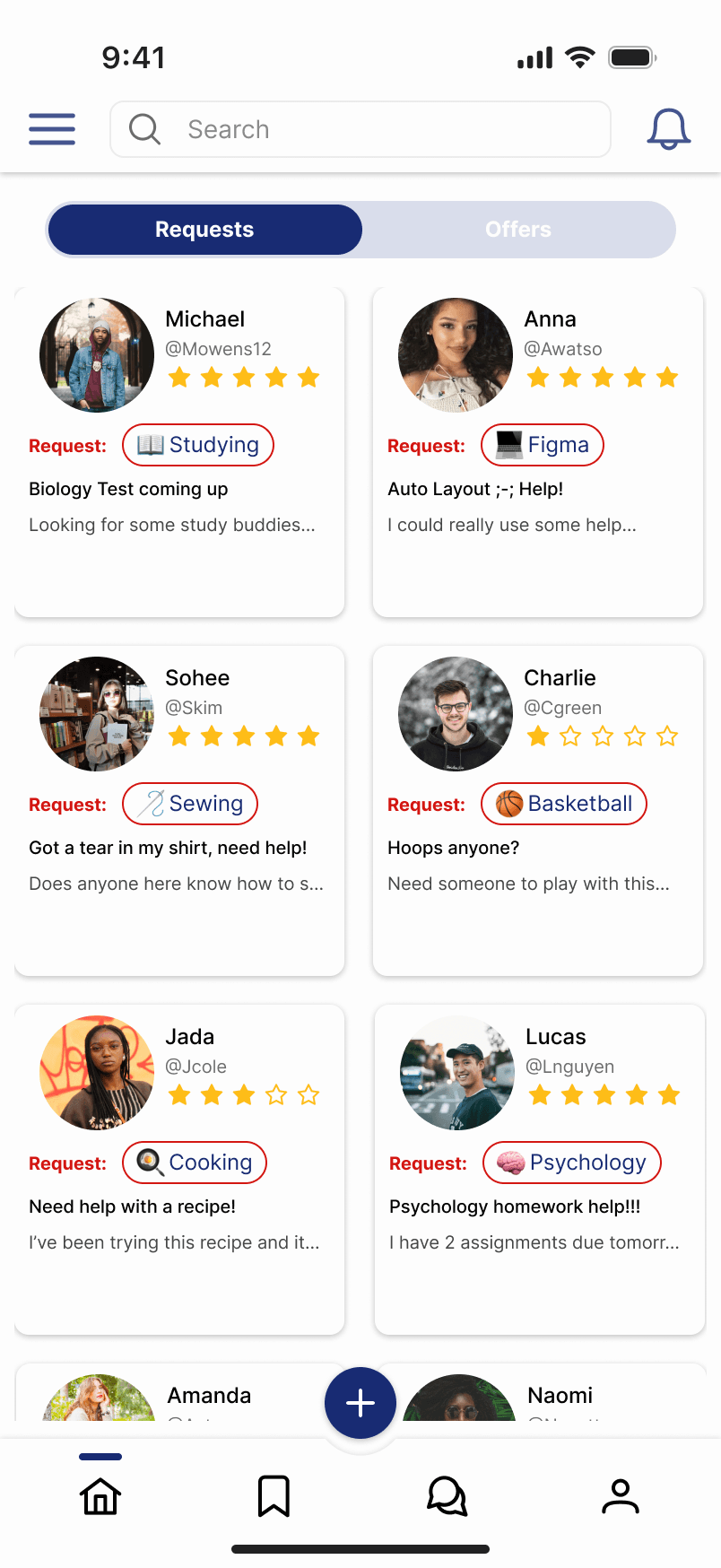
The first challenge was creating something users wanted to come back to. To solve this, we wanted our product to resemble what our users (students) had already been familiar with. Solving this, we drew aspects of design from key examples such as Handshake, Facebook Marketplace, Instagram, LinkedIn, and some others.
All In One
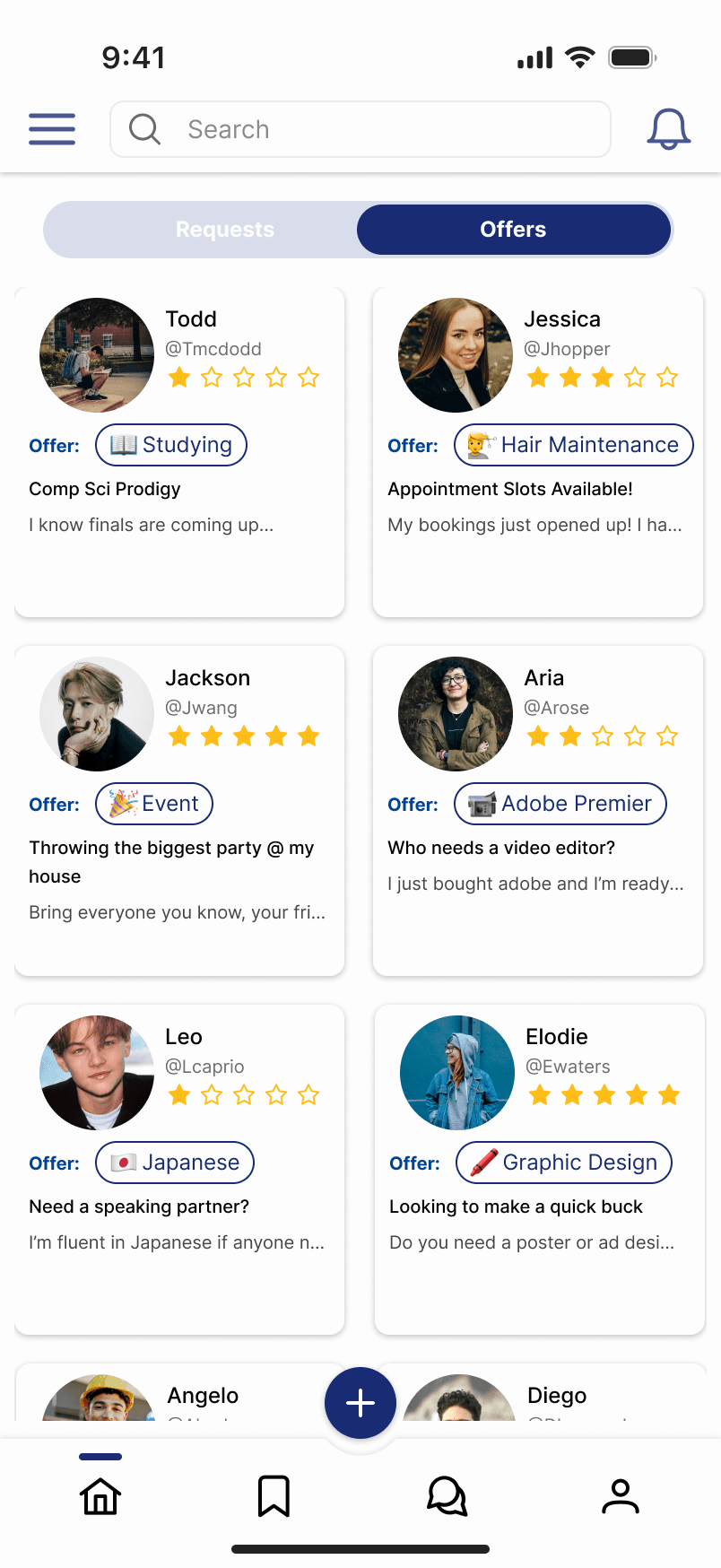
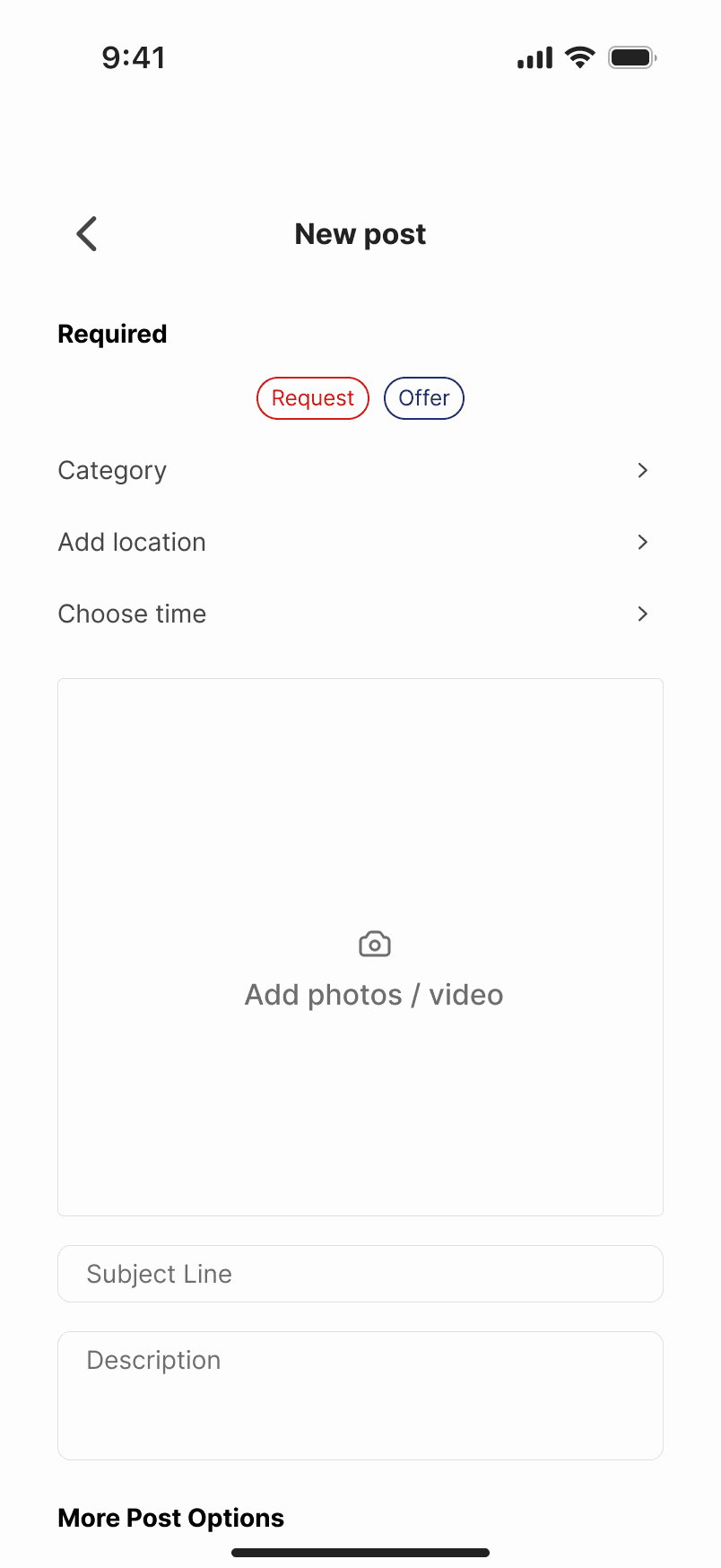
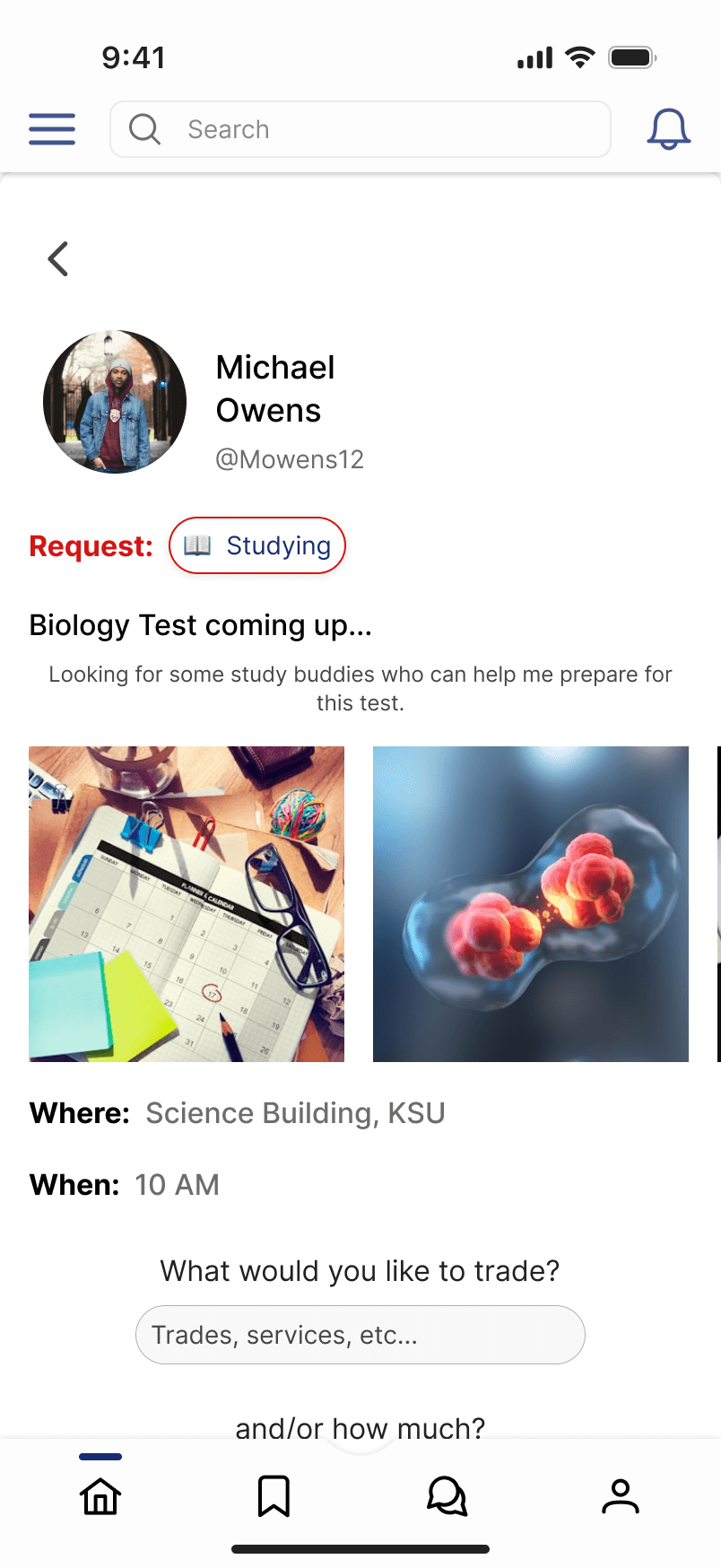
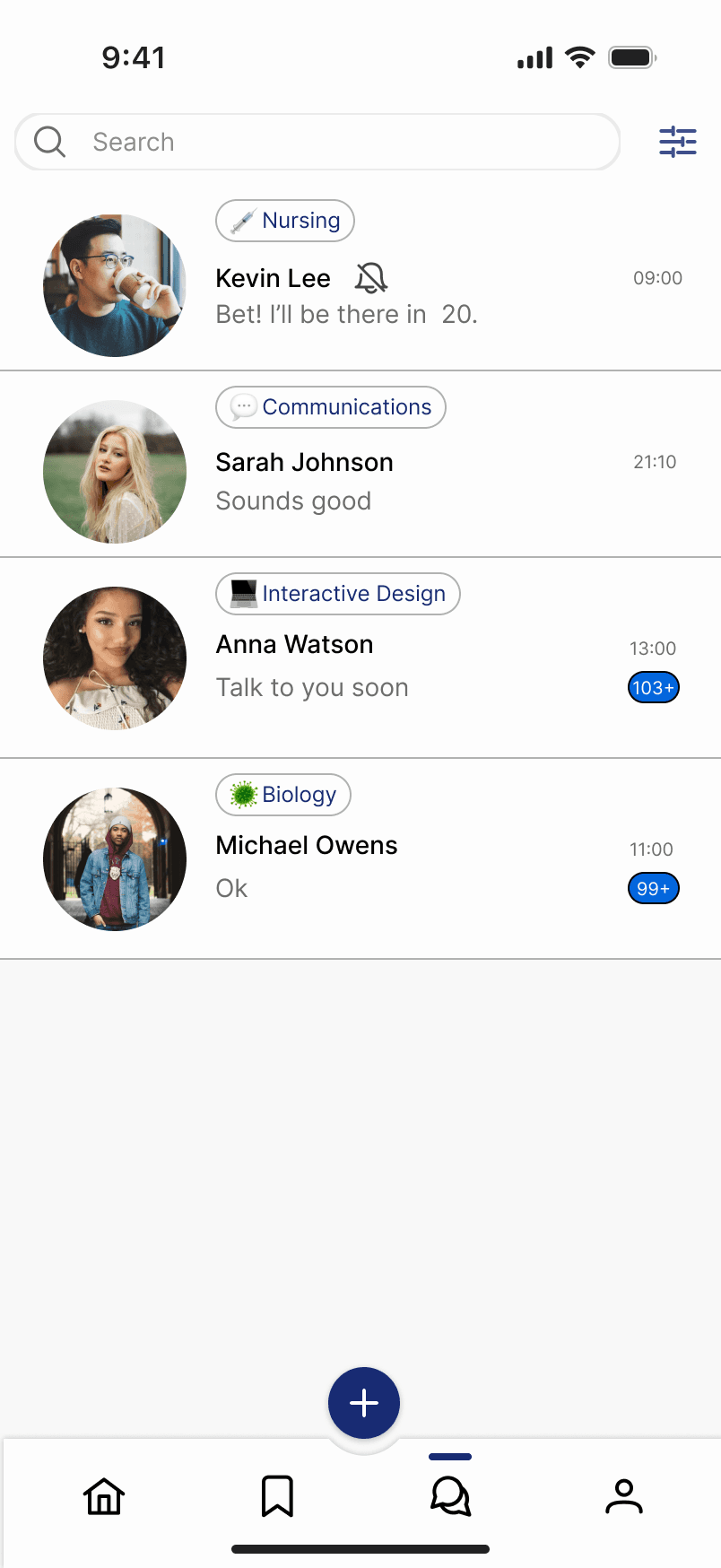
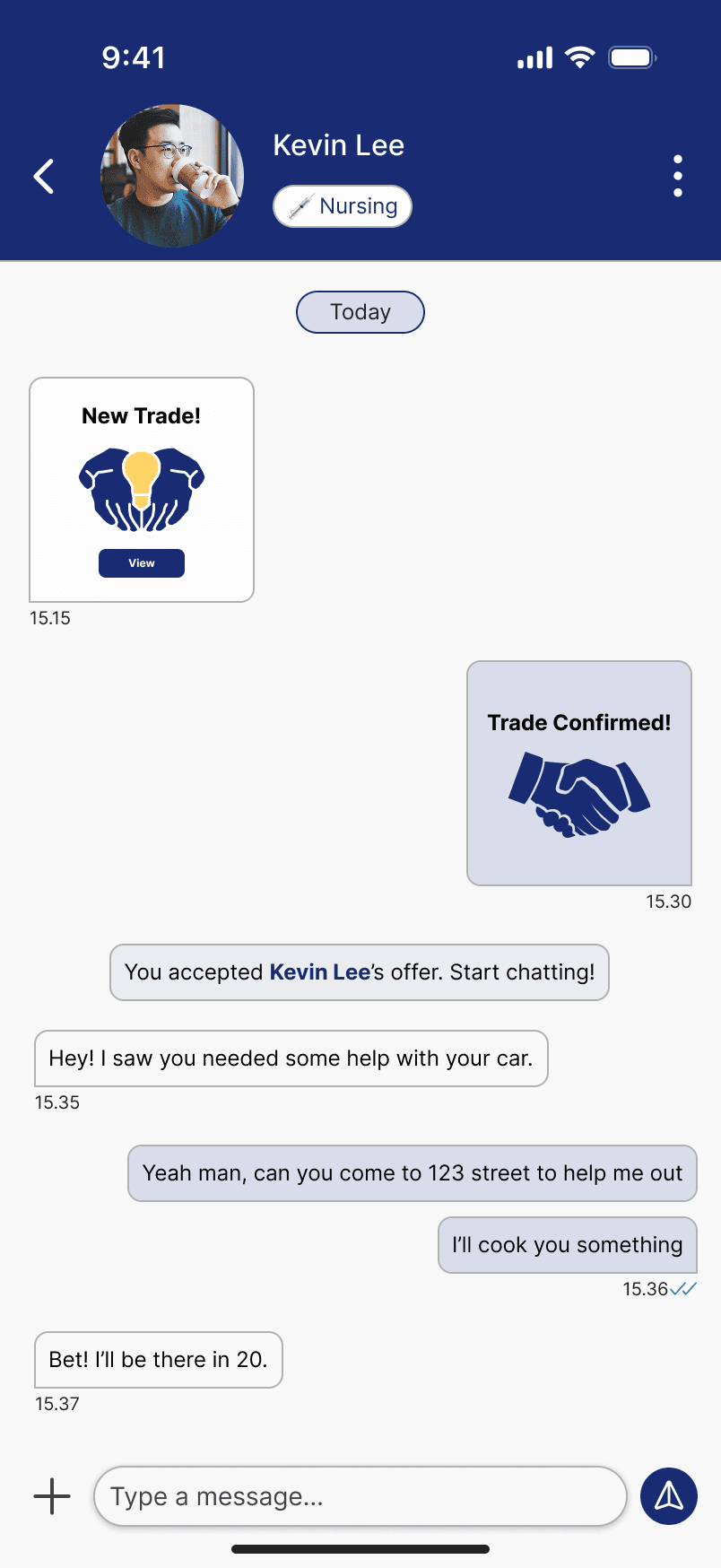
A chat is a space where an infinite amount of ideas can exist. Our team wanted to reserve that abstraction,, limiting our trade system to just a few automated flows, and allowing the rest to be handled by the users. Below is the process for creating a post, what it looks like, and what it looks like when users interact with those posts.
Trust
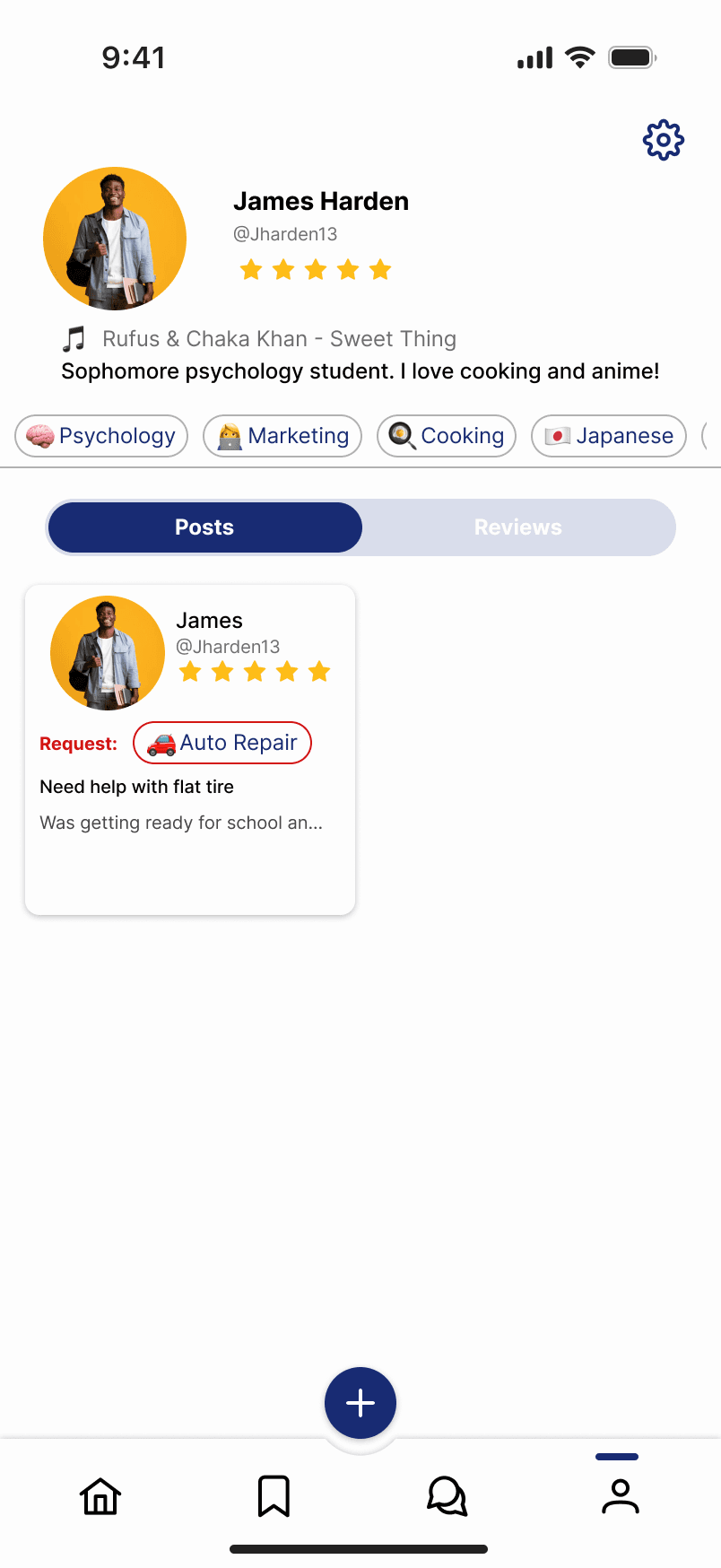
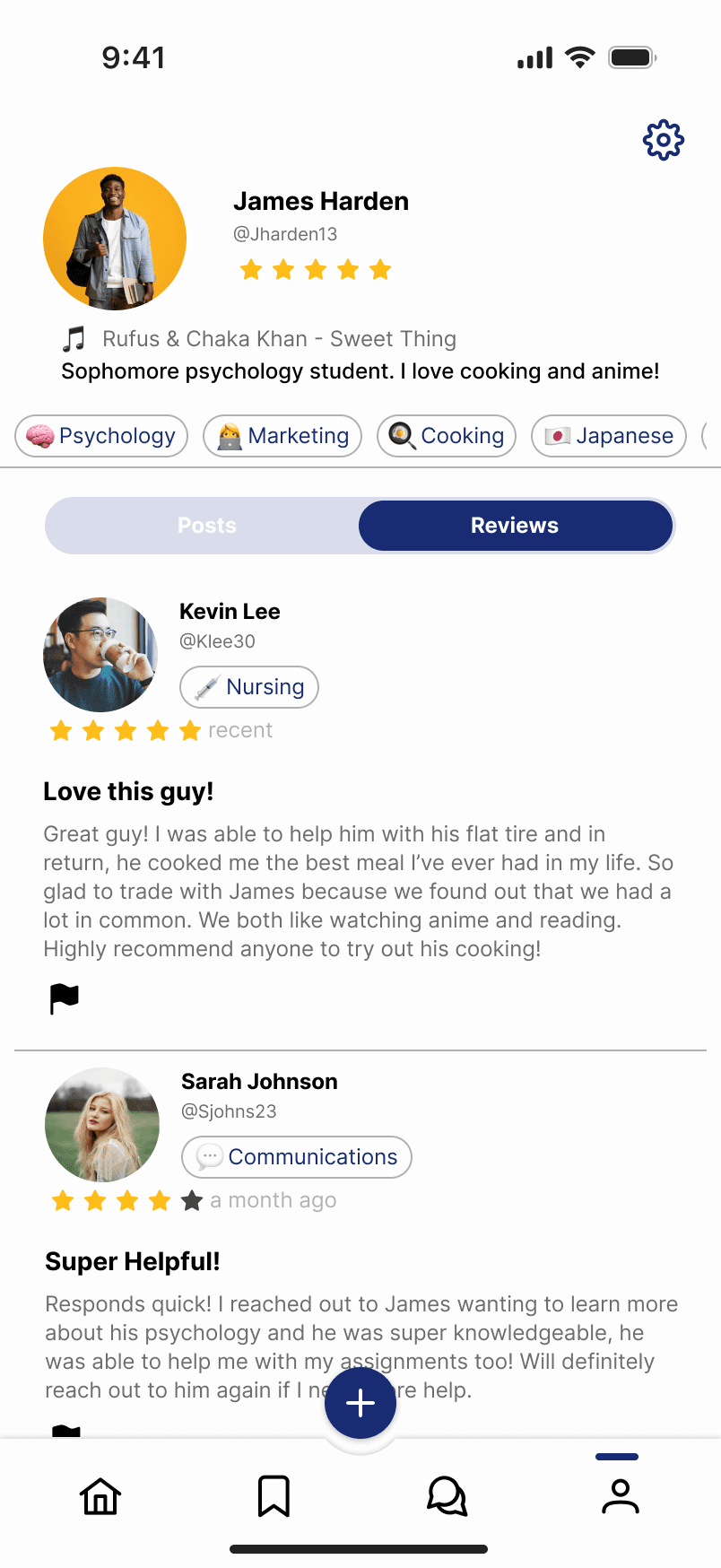
For something to be usable, it has to provide action without thought. Immediate action is only taken when users are fully at peace with the task that comes to mind. To tackle these concerns, we included student reviews, and minimal personalization to help students to preface and better conceptualize the kind of experiences they will have with one another.
Conclusion
Throughout the process of this design, I began to deeply value the emotional state of our users. It was very helpful to be a student myself, but what was crucial to the understanding of this app structure was creating our persona's. These fictional characters were the contributions of the frustrations of our amazing interviewee's and helped us to build a system that felt limitless and adaptable to a number of student situations.
If I could repeat this process with the team, I felt that we could benefit from additional usability testing: taking on real "personas" and adapting to a larger crowd of users.